
The 4 Most Important Things to Consider When Choosing Outdoor Furniture
We love designing our clients’ outdoor spaces just as much as their interiors. The right furniture is key to creating a space that feels both functional and inviting, but choosing pieces for the outdoors comes with a different set of considerations. From exposure to the elements and seasonal storage to fabric performance and material durability, there is more to consider than aesthetics alone.

Hoefnagels Outdoor Living
Whether you’re furnishing a small balcony, city terrace, screened porch, poolside patio, or larger outdoor entertaining space, thinking carefully about how and where each piece will be used can help you choose outdoor furniture that functions well, stands up to the elements, and continues to look good for years to come. Here are the four things we think matter most.
1. Consider Protection from the Elements
Before choosing outdoor furniture, start by considering exactly where it will be placed and how exposed it will be to the elements. Will your furniture sit beneath a covered porch or screened porch, or will it be completely exposed to sun, wind, and rain? Do you live somewhere with relatively consistent weather, or in a climate like the one we have here in Toronto, where outdoor furniture needs to withstand significant seasonal changes?
These considerations can influence everything from furniture materials to fabrics and accessories. As much as we love the warmth and softness an outdoor rug can add, we generally don’t recommend one for spaces that are completely exposed to the elements or receive frequent, heavy rain.

Location matters, too. For a waterfront property or a particularly windy rooftop terrace, consider how cushions and other lightweight elements will be secured or stored when not in use. In more exposed locations, choosing furniture with integrated cushion fastenings, or planning for convenient nearby storage, can prevent you from constantly having to bring loose cushions indoors.
Furniture covers are another important consideration. Depending on the material and degree of exposure, covers can help protect your investment and keep outdoor furniture looking its best for longer. When covers are required, we recommend purchasing them from the furniture manufacturer whenever possible. A properly fitted cover is easier to use and offers better protection than a generic one-size-fits-all option.
The goal is to be realistic about your space. The right outdoor furniture should work with your environment rather than require constant attention every time the weather changes.
2. Plan for Storage Before You Buy
Storage is one of the most easily overlooked considerations when selecting outdoor furniture.
Whether you live in a smaller home, have limited garage or shed space, or need to store furniture and cushions seasonally, it’s worth thinking about where everything will go during the off-season before making a purchase.
For compact outdoor spaces, stackable outdoor dining chairs, stools, and loungers can significantly reduce the amount of storage space required. Pieces that nest or stack neatly can be particularly useful for city terraces, balconies, and smaller patios where space is at a premium.
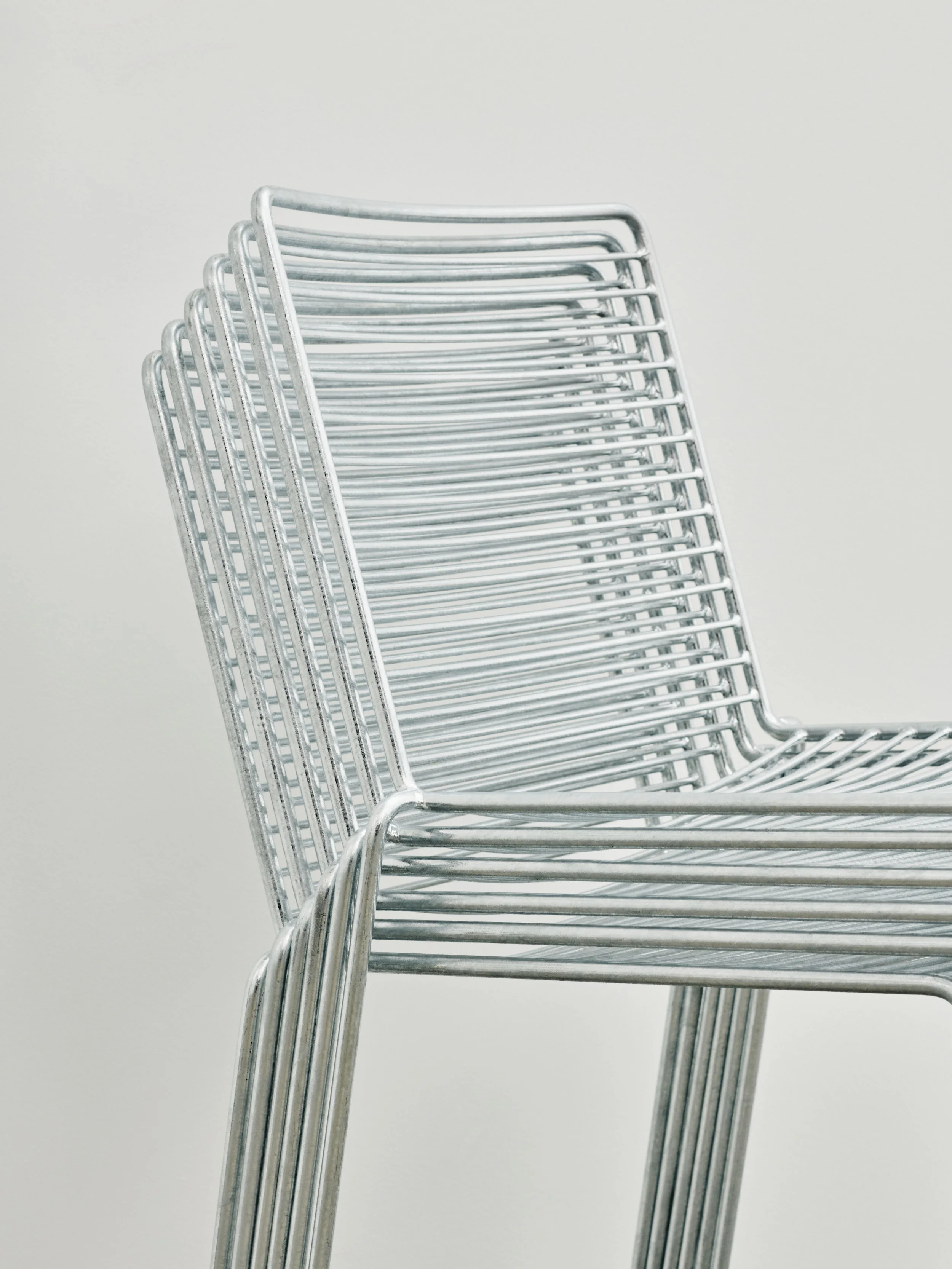
Stackable Hee Dining Chair — HAY
Image courtesy of HAY
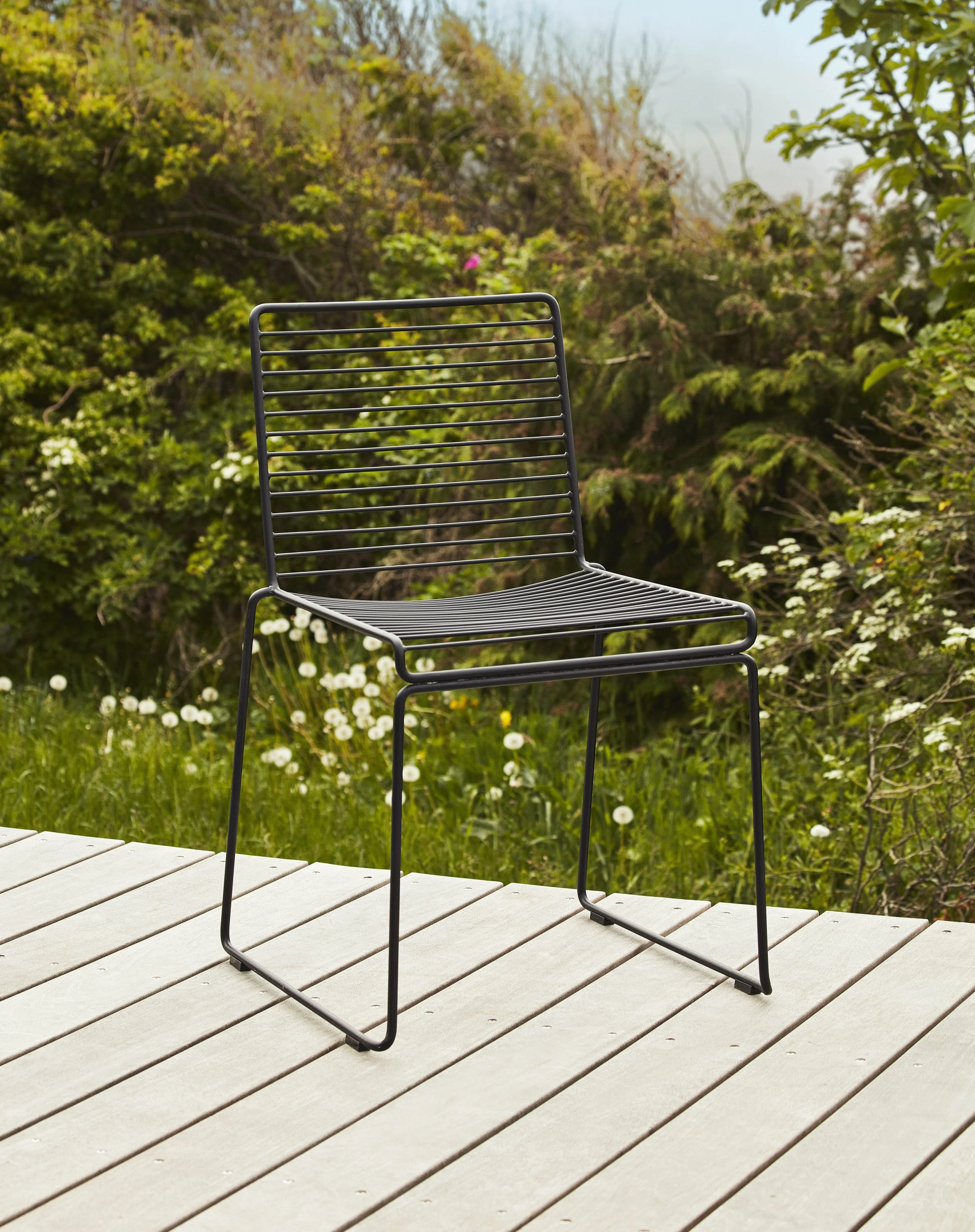
Stackable Hee Dining Chair — HAY
Image courtesy of HAY
Another approach is to incorporate more permanent outdoor elements that don’t require seasonal storage. For example, in the backyard of our Beaches Residence, built-in bench seating was integrated into the decking surrounding the outdoor fireplace, providing year-round seating without the need to move or store a large piece of outdoor furniture.

Maximize a small outdoor footprint with built-in seating.
Beaches Residence — Backyard
Storage presented a different challenge for our Beaches Rooftop. Located on the roof of a three-storey home, the space is more exposed to wind and rain. Carrying cushions and furniture covers up and down several flights of stairs every time the weather changed simply wasn’t practical.
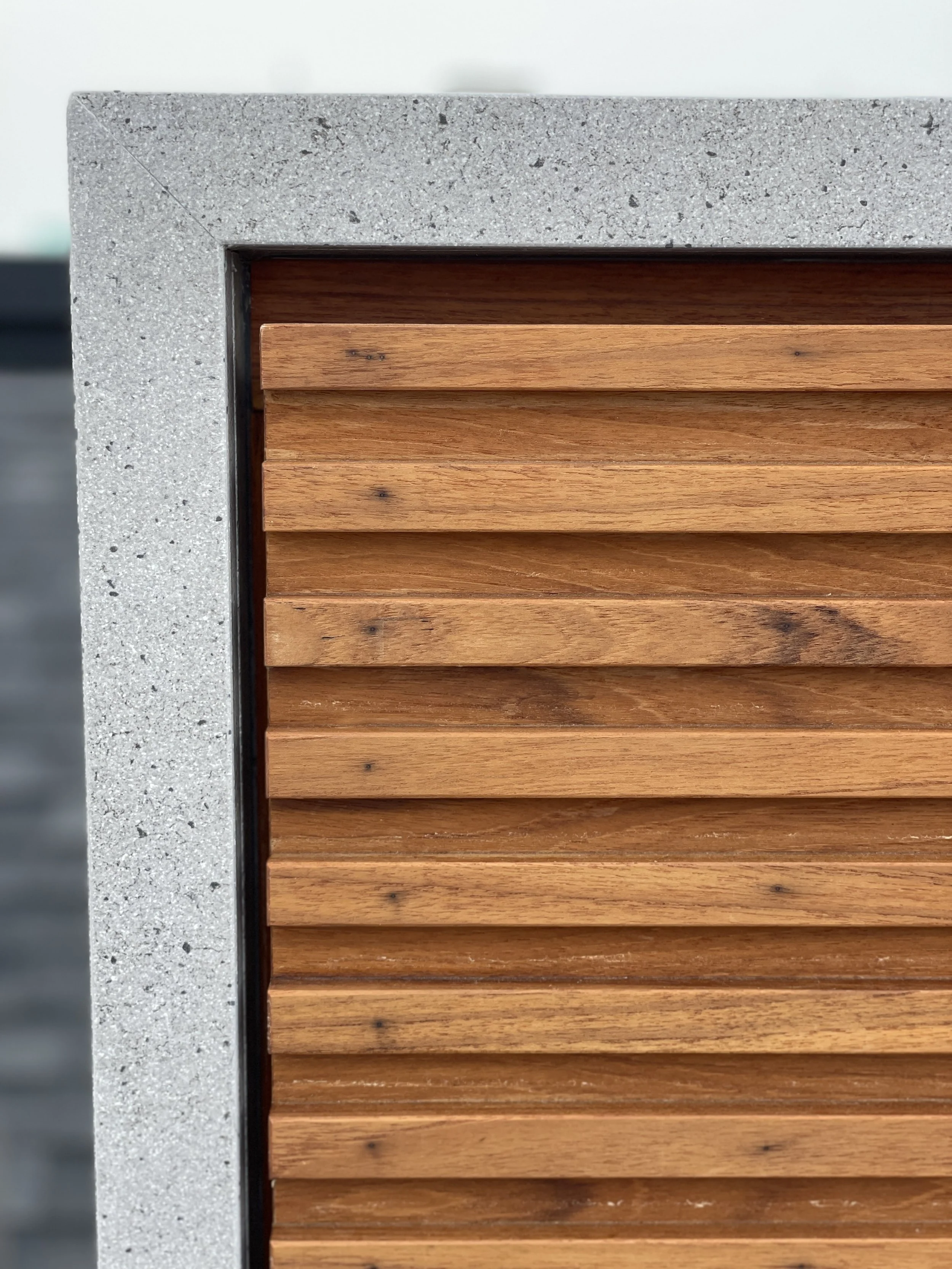
Our solution was to incorporate dedicated storage for cushions and covers directly into a custom teak bar unit, pictured below. Everything needed for the rooftop is stored where it is used, making the outdoor space much easier to enjoy and maintain.

Custom-designed bar with integrated storage keeps everything close at hand and conveniently tucked away.
Beaches Rooftop
For flexible seating that is easier to store, stackable designs, such as the Lucinda outdoor stacking patio chair by CB2 and dining chairs, bar stools, and lounge chairs from the HAY Hee Collection, are good examples of how a relatively simple piece of furniture can adapt to different uses while taking up minimal space when not required.

Stackable Hee Bar Stools by HAY.
Hoefnagels Outdoor Living
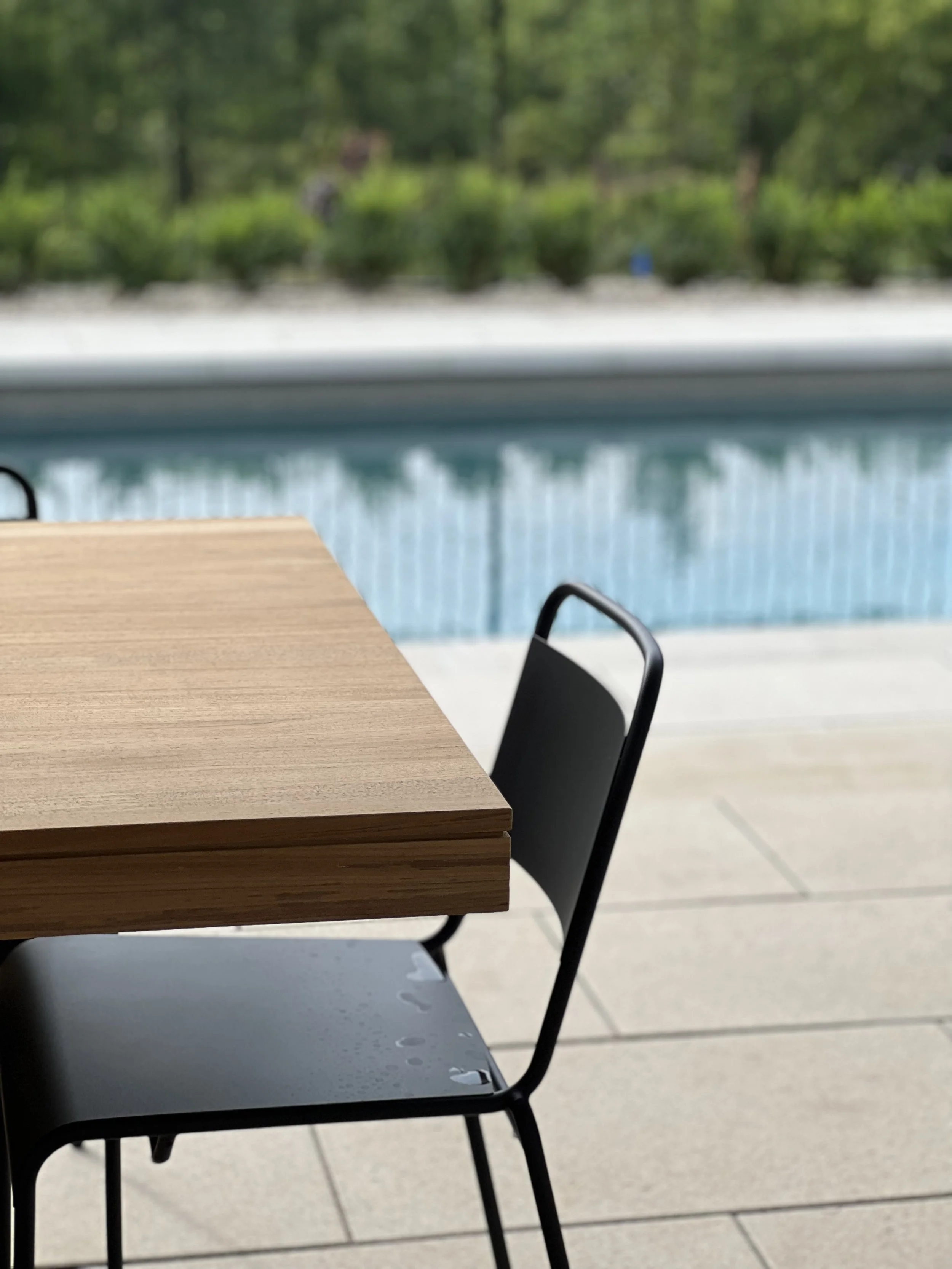
Lucinda Outdoor Stacking Patio Chair by CB2.
Hoefnagels Outdoor Living
3. Look Beyond the Label When Choosing Outdoor Fabrics
Many manufacturers describe their cushions and upholstery as suitable for outdoor use, but not all outdoor fabrics perform equally.
For upholstered outdoor furniture, we recommend looking for high-performance outdoor fabrics such as Sunbrella or a comparable alternative. The fabric should be water-resistant or water-repellent, fade-resistant, UV-resistant, and easy to clean.
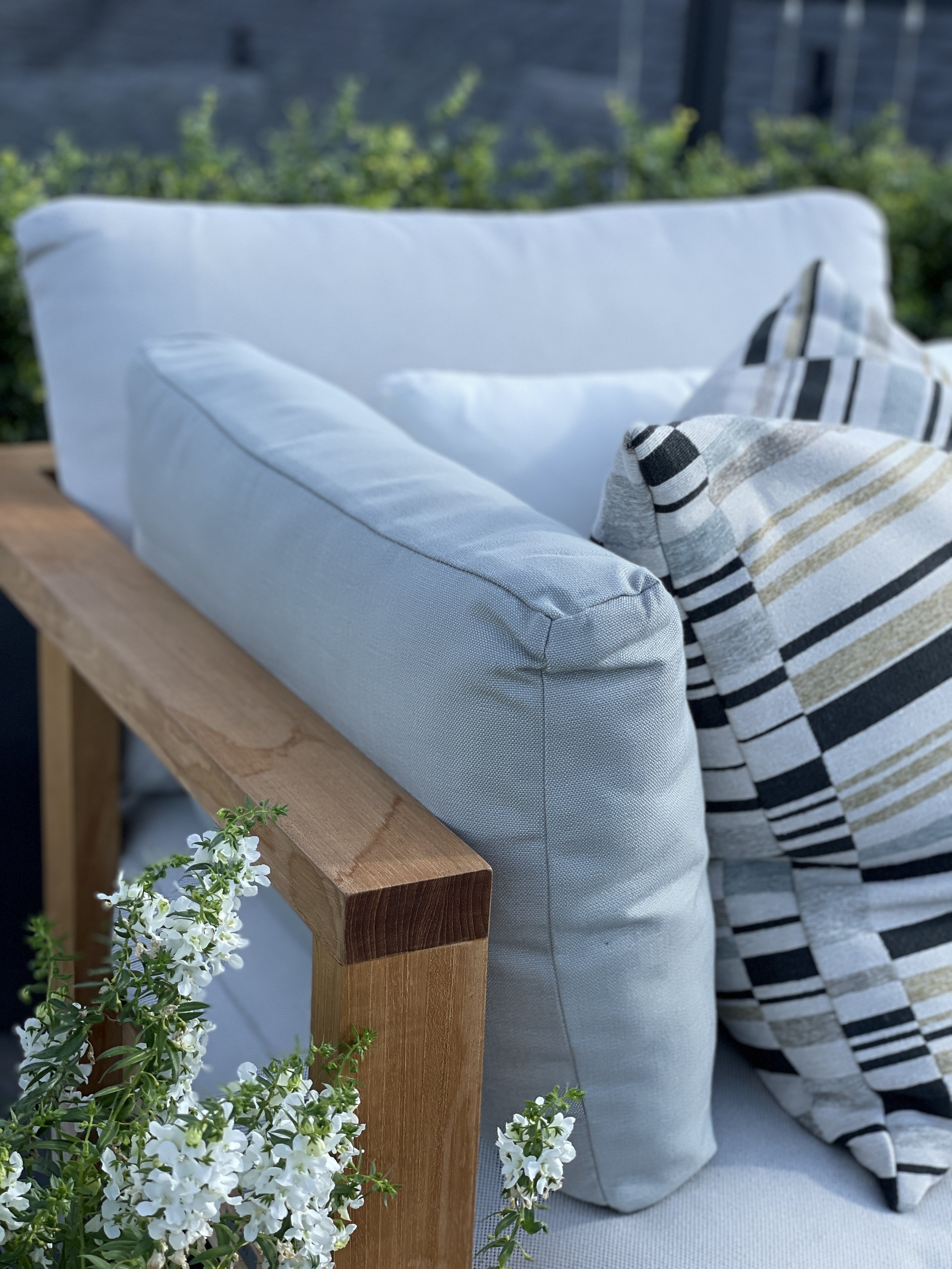
This is particularly important for furniture that will receive regular sun exposure. Lower-quality fabrics can fade quickly, leaving outdoor cushions and upholstered furniture looking tired after only a few seasons.
It is also worth looking at how cushions themselves are constructed. Removable, washable covers make routine cleaning considerably easier, while quick-drying cushion construction can be valuable in spaces exposed to moisture and rain.
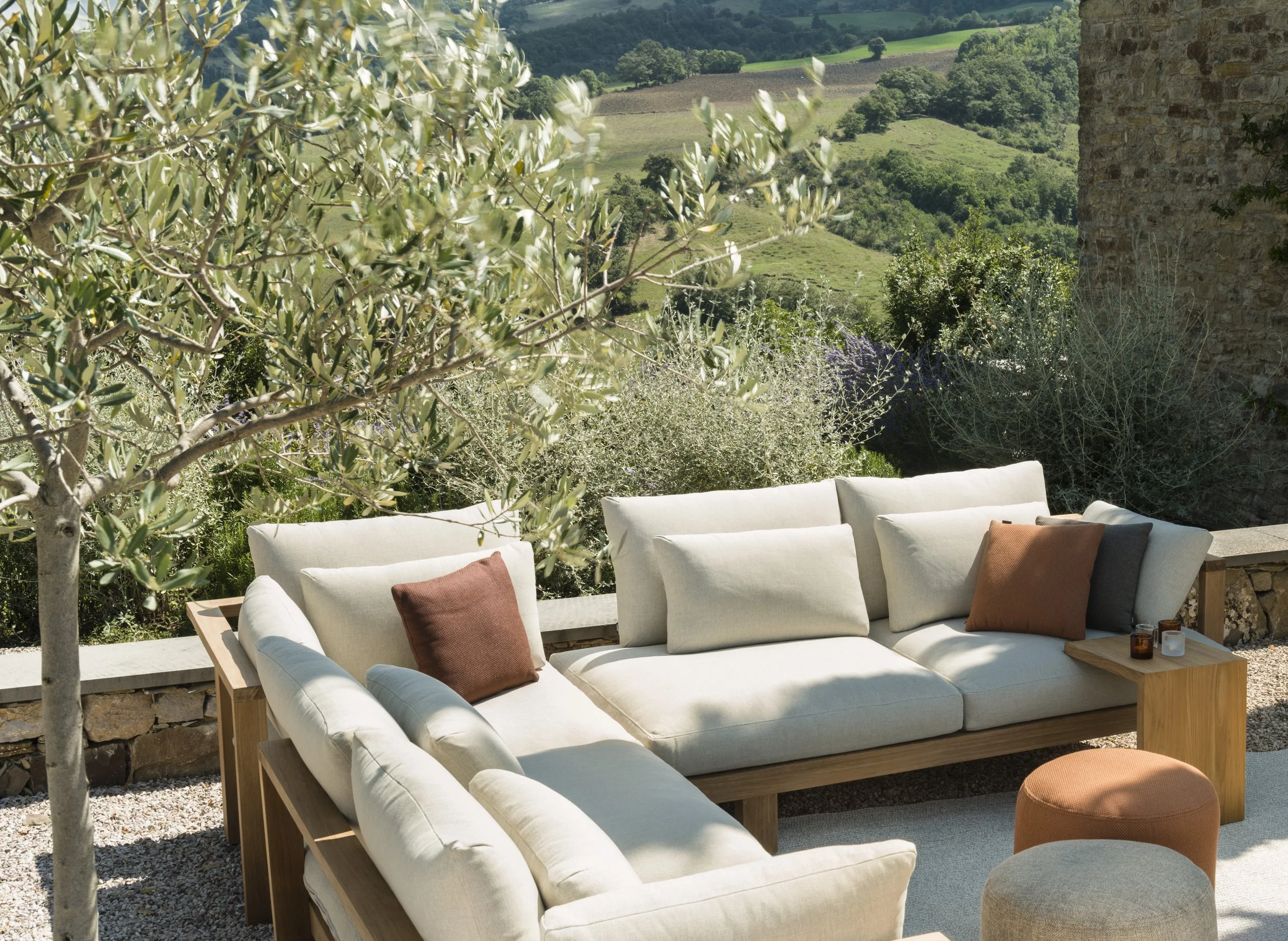
Pure Sofa — Tribù
Image courtesy of Tribù
When investing in larger upholstered pieces such as an outdoor sectional or lounge chairs, we pay particular attention to both comfort and performance. Collections such as the Tribù Pure Sofa and the Quantum Sectional from Hauser illustrate how contemporary outdoor furniture can provide the comfort of an interior living space while using materials intended for outdoor environments.
4. Choose Materials That Suit Your Climate and Lifestyle
Just as with outdoor fabrics, not all furniture materials are created equal. A material may be described as suitable for outdoor use, but that doesn’t necessarily mean it is the right choice for every climate, location, or lifestyle.
Before purchasing outdoor furniture, look carefully at what each piece is made from and how much maintenance it requires. We generally consider the following materials:
Powder-coated metal:
Powder-coated aluminum and steel are durable, relatively easy to clean, and available in a wide variety of colours and finishes. They work particularly well in contemporary outdoor spaces and can provide a lighter visual profile than heavier furniture materials.
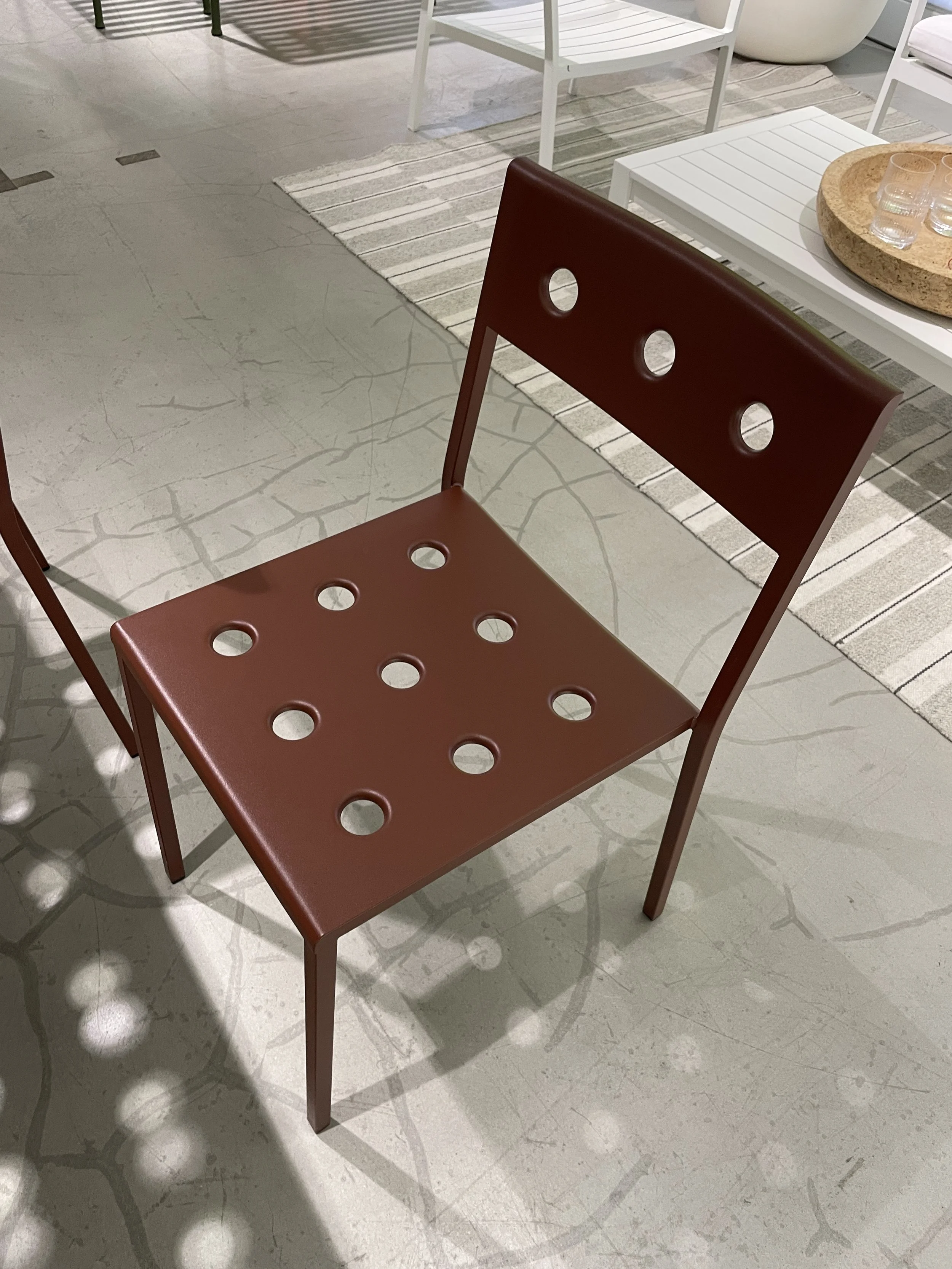
The powder-coated steel Pallisade Collection by HAY and Blu Dot Circula Outdoor Nesting Coffee Tables are good examples of how metal outdoor furniture can combine durability with a clean, sculptural form.
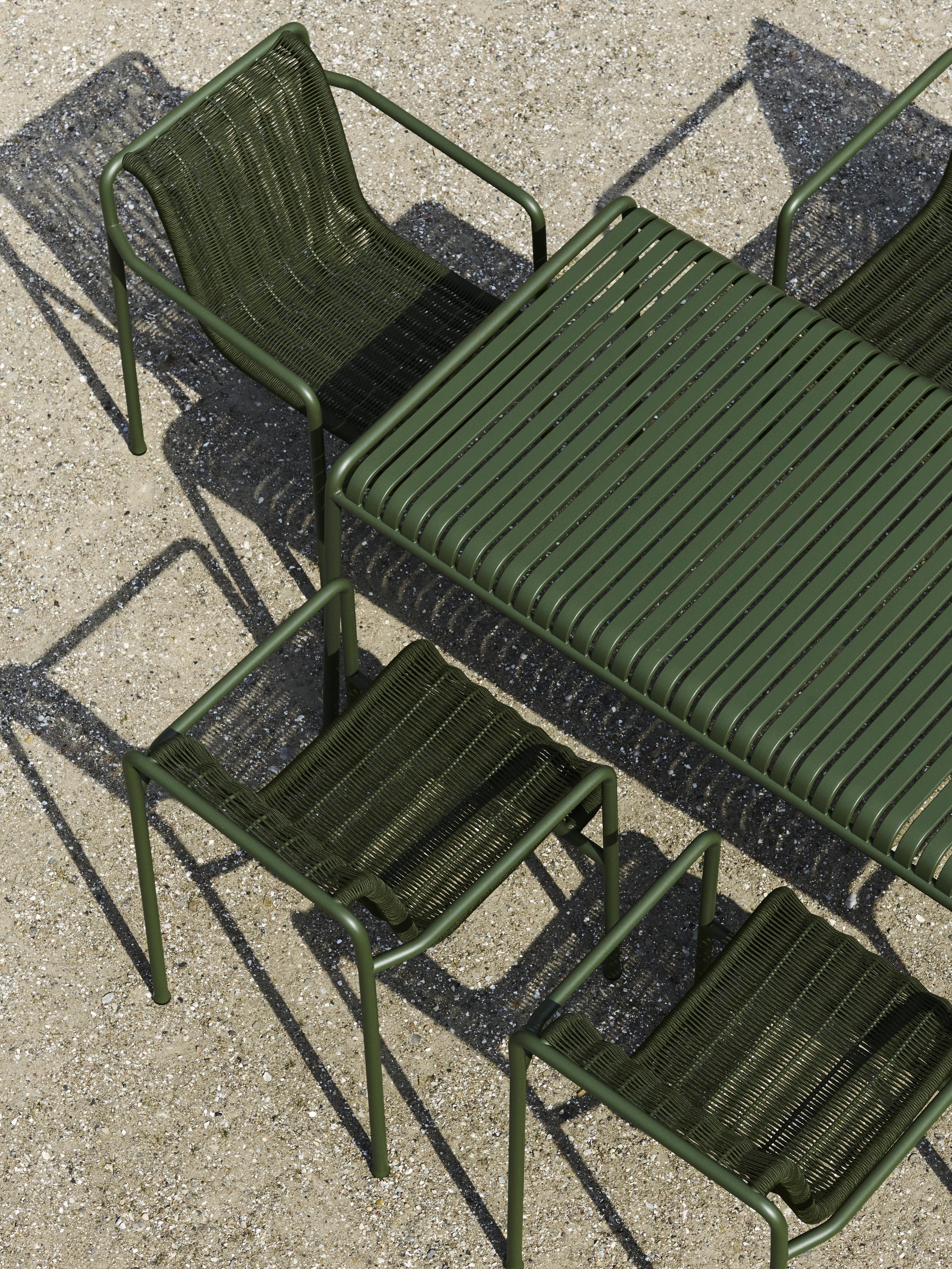
Pallisade Cord Collection — HAY
Image courtesy of HAY
Solid hardwood:
When choosing wood outdoor furniture, look for solid hardwood species that are naturally suited to exterior conditions. Teak is one of our favourites because of its natural warmth and inherent durability.
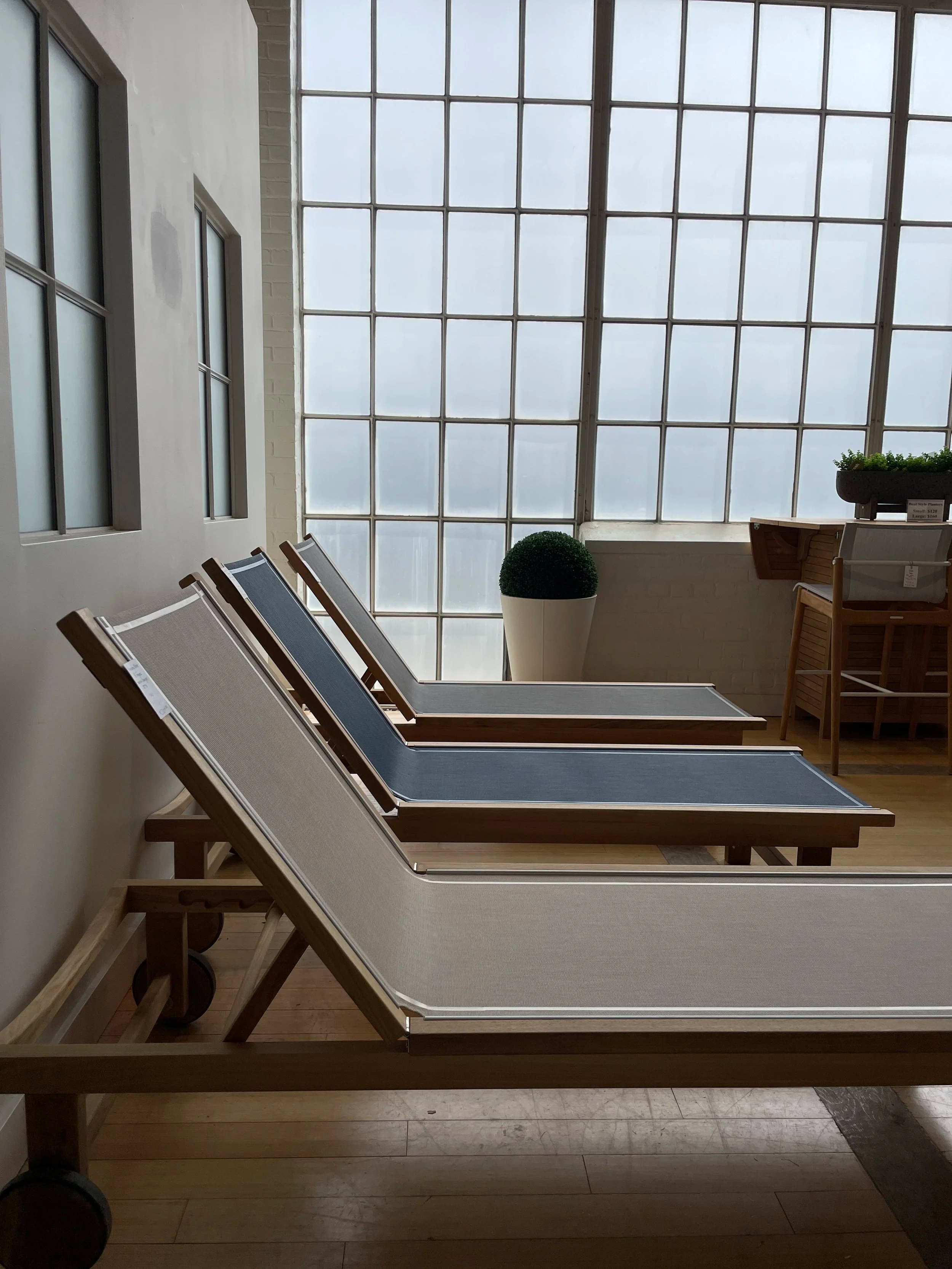
Teak can be maintained with oil to preserve more of its original colour or allowed to weather naturally to a soft silver-grey patina. Either approach can be beautiful. The Kayu Teak Dining Table and Bench from Design Within Reach is a great example of how teak can soften a contemporary outdoor space while introducing warmth and natural texture.

Kayu Dining Table and Bench by Design Within Reach
Hoefnagels Outdoor Living
Concrete:
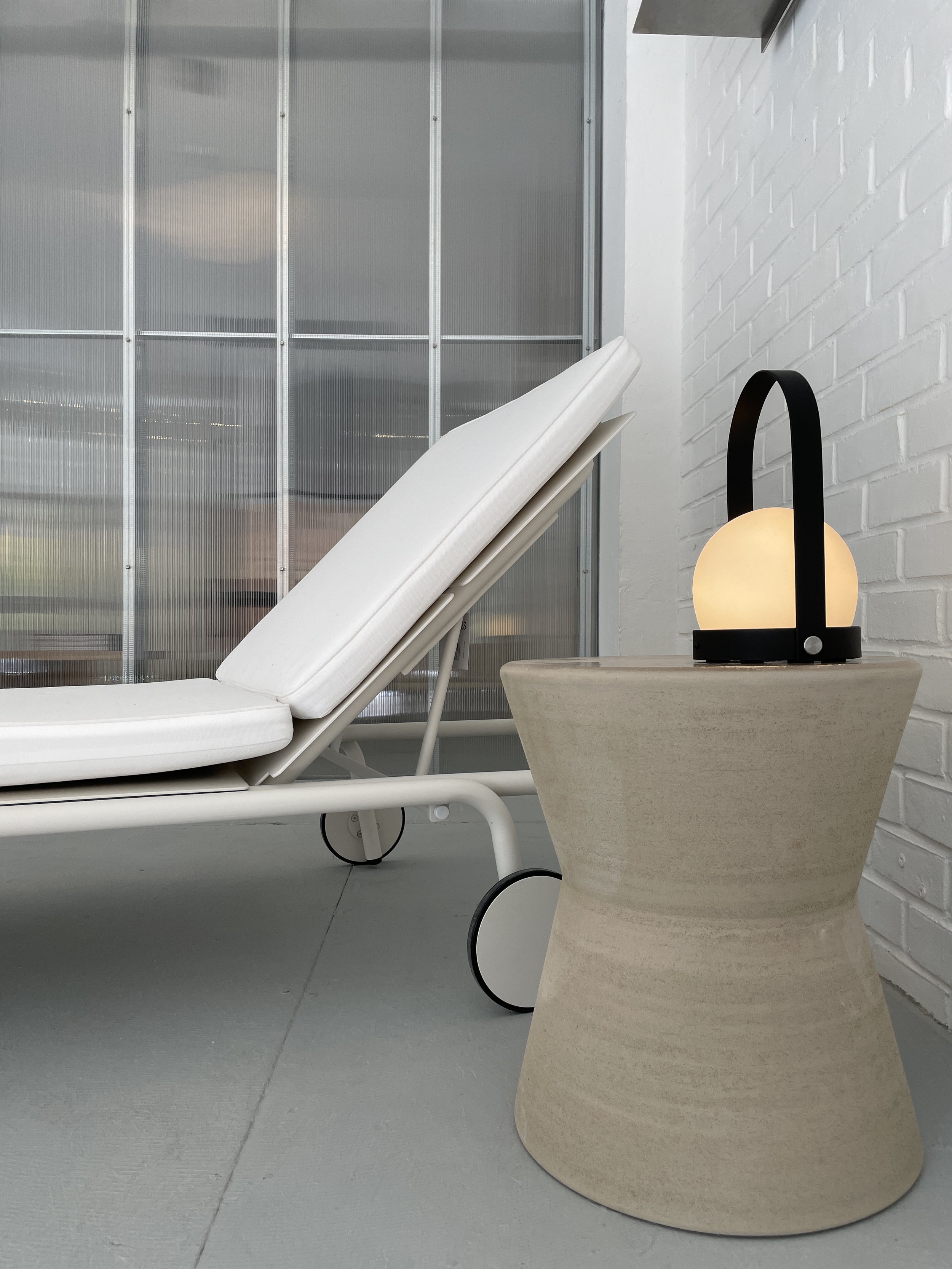
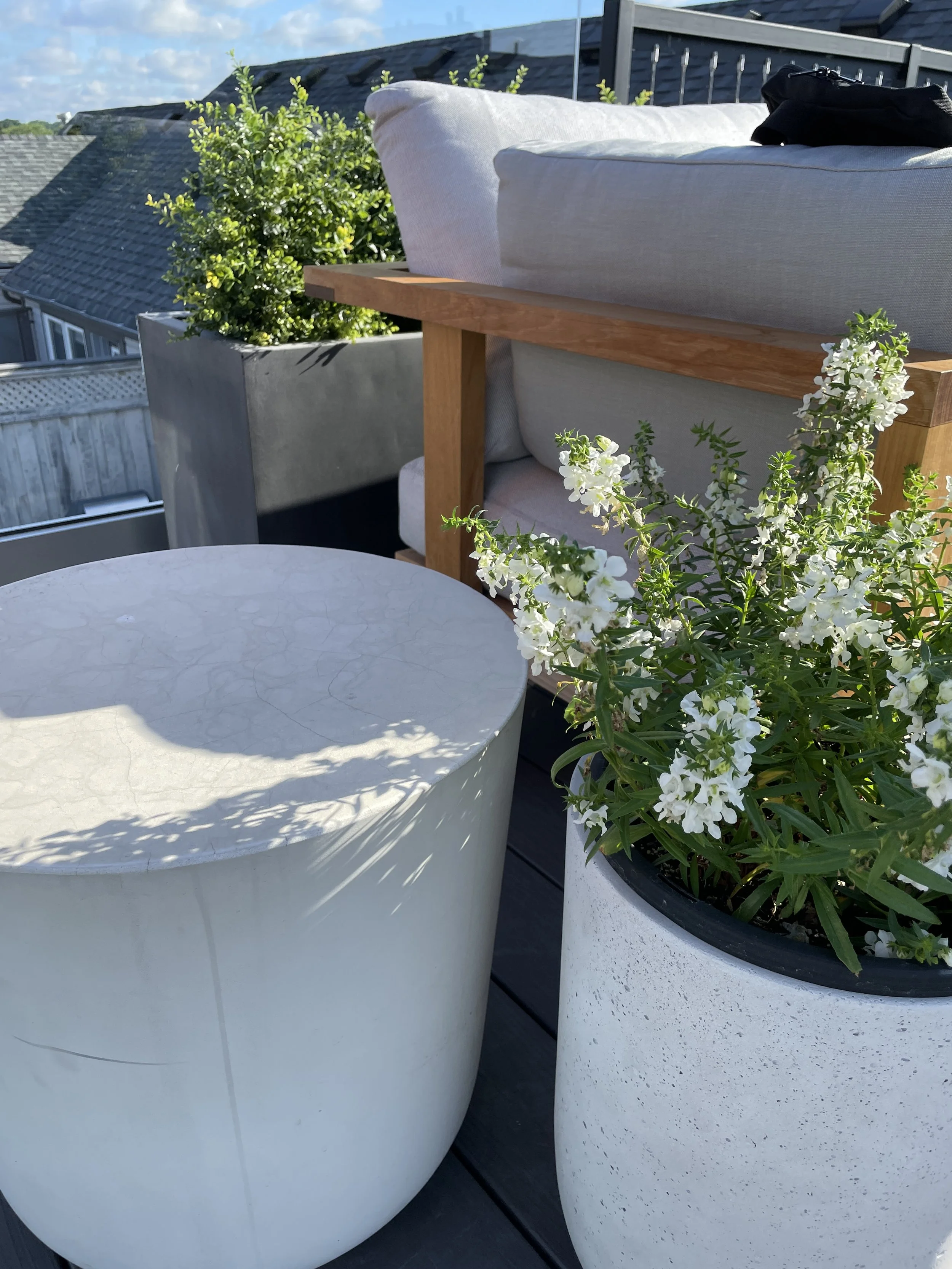
Concrete is durable, substantial, and resistant to the elements. It works particularly well for outdoor side tables and coffee tables, where its visual weight can help ground a furniture arrangement. Because concrete pieces can be heavy, they are often best suited to locations where furniture won’t need to be moved frequently.
Recycled composite materials:
While our first instinct is generally to favour natural materials over plastic, high-quality recycled composite furniture can be a practical option when durability and low maintenance are priorities.
Look for pieces made from recycled high-density polyethylene that is also recyclable. This material is highly durable, easy to clean, and particularly practical in exposed outdoor environments.

Lollygagger Outdoor Lounge Chair by Loll Designs.
Hoefnagels Outdoor Living
The Loll Designs Lollygagger Outdoor Lounge Chair featured in our Hoefnagels Outdoor Living Project is an example of how recycled material can be used in a clean, contemporary design.
Ultimately, the best outdoor furniture material depends on where you live, how exposed the space is, how much maintenance you are comfortable with, and how you plan to use the furniture.
Final Thoughts
Choosing outdoor furniture is about finding the right balance between aesthetics, comfort, durability, and practicality. A beautiful piece is only a good investment if it works for the realities of your space and the way you plan to use it.
Before purchasing, consider how exposed the furniture will be, where cushions and covers will be stored, how the fabrics will perform in sun and rain, and whether the materials are suited to your local climate. These practical considerations don’t need to limit the design of your outdoor space. In fact, making thoughtful decisions at the beginning can create a space that is easier to live with and enjoy throughout the season.
At Studio Ha/Wa, we consider outdoor spaces as a natural extension of the home. From compact urban backyards to larger outdoor entertaining areas, our goal is to create spaces that feel comfortable, functional, and connected to the way our clients live.
Contact us to book a free discovery call and find out how we can help bring your vision to life, whether you’re planning a residential or commercial project. Or explore our services to learn more about our approach to creating thoughtful, functional spaces.
